Dryer Takes Two Cycles: Safe Airflow Checks Before Service
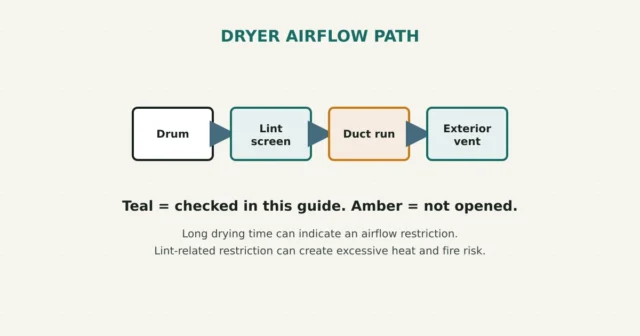
Longer drying time can indicate a blocked lint screen or exhaust path. Check the screen, load and exterior airflow, and…
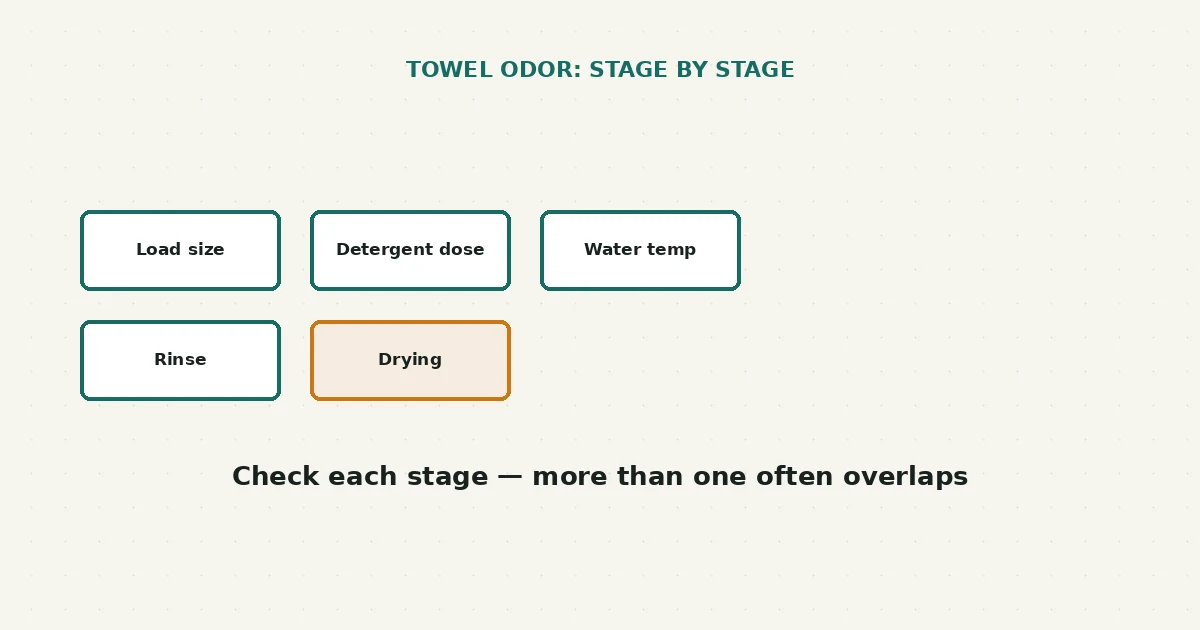
Towels that still smell after washing may involve detergent or softener residue, a tightly packed load, unsuitable cycle settings, incomplete drying, storage moisture or odor already present in the washer. More than one factor can overlap, so this guide checks the routine stage by stage instead of claiming one diagnosis from smell alone.
Smell a dry towel straight out of the linen closet, and smell one straight out of the dryer. If the dryer-fresh towel already smells musty, the cause is more likely the wash or the washer. If it only smells musty after sitting folded for a while, incomplete drying is more likely. The decision table below breaks this down further by stage.
Towels are thick and absorbent by design, which makes them more prone to trapping both moisture and detergent residue than lighter fabrics. A musty smell in towels specifically — more than in the rest of a laundry load — often points to one of two overlapping issues: residue that didn’t fully rinse out, or moisture that didn’t fully evaporate before the towel was folded and stored. Both are genuinely common and don’t indicate anything wrong with the towels themselves.
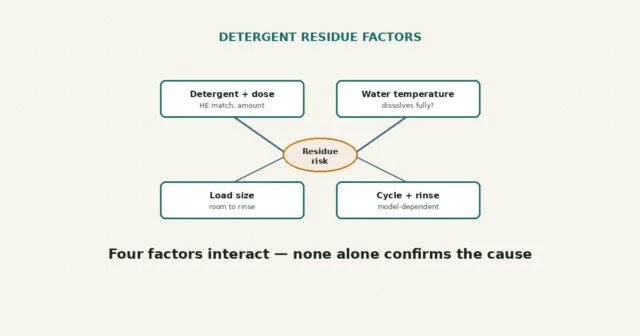
It’s worth being clear about what this guide treats as observations rather than confirmed causes. Detergent amount, water temperature, load size, rinse performance, and drying time all affect the outcome, but none of them can be confirmed as the cause just from a smell — the checks below are about narrowing down which is most likely for your situation, not diagnosing with certainty.
It also helps to separate a smell that was already there before washing from one that develops afterward. A towel that smelled musty going into the wash and still smells musty coming out may not have been cleaned thoroughly enough by that cycle — which points toward detergent, water temperature, or rinse performance. A towel that smelled fine coming out of the dryer but musty a day or two later points more toward incomplete drying or storage conditions instead.
| Stage | What to check | What it may suggest |
|---|---|---|
| Before washing | How many towels were in the load, and how full was the washer? | An overloaded washer can prevent detergent from rinsing out fully |
| Detergent and dosing | Was the amount used matched to load size and your washer’s guidance? | Excess detergent is one of the most common causes of residue-related odor |
| Fabric softener | Was fabric softener used on this load? | Softener can coat fibers and interfere with how well towels absorb and release moisture, which can contribute to musty smell over time |
| Water temperature | What does the towel care label allow, and which cycle was selected? | A compatible warmer setting may help with some odor or residue, but the care label and washer manual set the safe limit |
| Rinse performance | Does your washer have an extra rinse option, and was it used? | An additional rinse can help clear residue on some models, where supported |
| Drying | Were towels dried immediately, and dried fully before folding? | Towels left damp — in the washer, in a hamper, or folded while still slightly moist — are a very common cause of musty smell unrelated to the wash itself |
Work through this top to bottom as a checklist for your own routine rather than treating any single row as a confirmed cause — more than one of these often contributes at once.
This guide covers detergent use, load size, water temperature, rinse options, and drying habits — the parts of the routine you control directly. It does not cover diagnosing or repairing washer or dryer faults, and it does not recommend boiling, universal hot-water treatments, repeated chemical stripping routines, or masking odor with fragrance rather than addressing the cause. If the checks above don’t resolve the smell, or if you’re seeing signs of an appliance fault rather than a towel-care issue, that’s a different problem than this guide addresses.
Smelling a towel straight from the dryer is a useful test — if it already smells musty at that point, the washer or wash routine is more likely involved than the towel itself or how it was dried.
Not necessarily — using more than the recommended amount is one of the more common causes of the residue that leads to lingering odor, so matching the dose to your load rather than adding extra is usually the better approach.
Not always, but it’s a common contributing factor for towels specifically, since softener coatings can interfere with how towel fibers absorb and release moisture. Skipping it for a wash or two is a reasonable, low-risk way to test whether it’s a factor for you.
This varies by humidity, fabric, and how tightly they’re packed, so there’s no single time that applies everywhere — as a general habit, moving towels from washer to dryer promptly is more reliable than watching a clock.
A thicker towel can hold more water and may take longer to dry through its seams and folds. That does not guarantee odor, but it makes a complete-dryness check especially useful before folding or storing it.
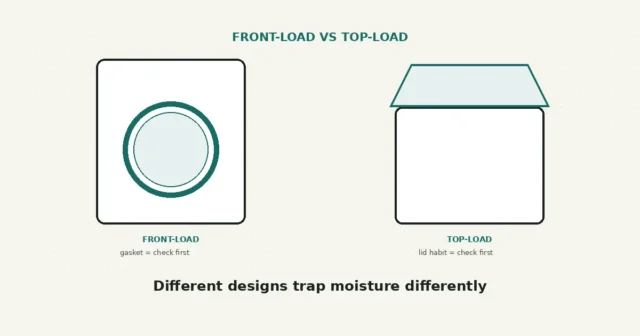
If the smell seems to be coming from the washer itself rather than just the towels, this washing machine odor guide walks through gasket, dispenser, and tub checks for both front-load and top-load machines. And if you’re noticing residue on dark clothing from the same detergent routine, this detergent residue guide covers a related dosing question.
New to RFSE? See how to approach any RFSE guide safely, or browse the full Laundry & Cleaning hub for more guides like this one.
This guide is based on official manufacturer documentation current as of publication. Cycle options, temperature settings, and rinse features vary by washer model — always confirm details against your exact machine’s manual and your towels’ care label.
Longer drying time can indicate a blocked lint screen or exhaust path. Check the screen, load and exterior airflow, and…
White residue may be undissolved detergent, lint or a soil–detergent interaction. HE compatibility, dose, load, water and cycle choices can…
A musty smell may involve trapped moisture or residue, but odor alone cannot confirm mold. Compare front-load and top-load checks…