Dryer Takes Two Cycles: Safe Airflow Checks Before Service
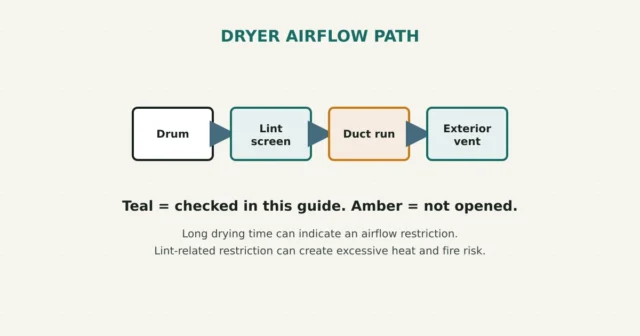
Longer drying time can indicate a blocked lint screen or exhaust path. Check the screen, load and exterior airflow, and…
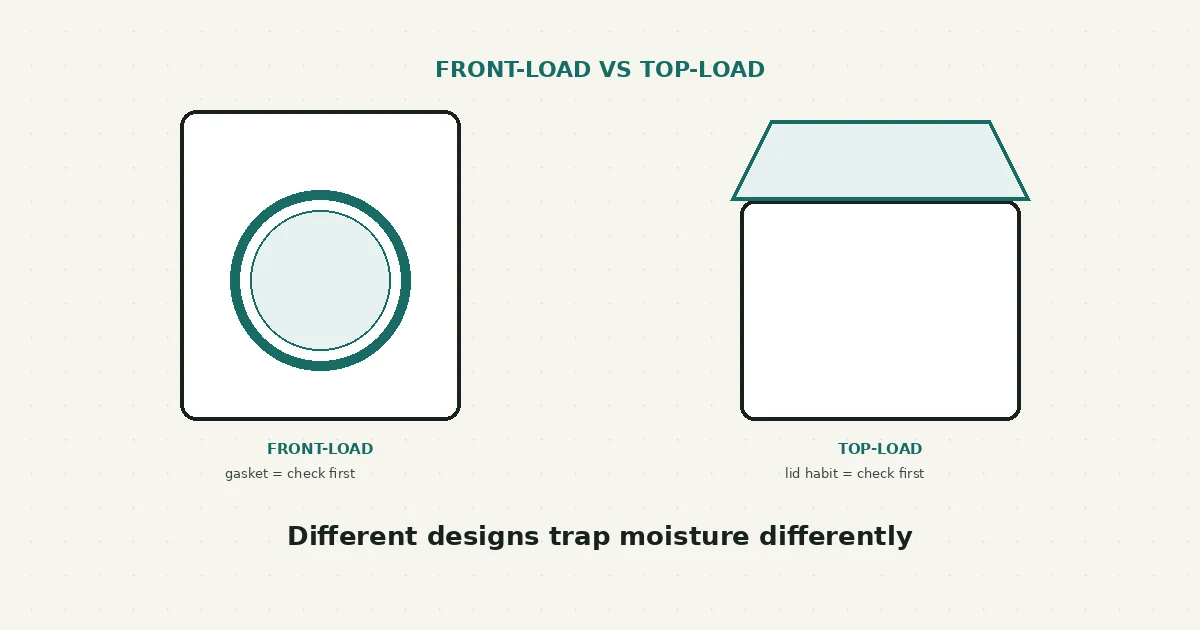
A musty washing machine smell may come from moisture or residue around the drum, door gasket, lid area or dispenser. Odor alone cannot confirm mold, and front-load and top-load washers hold moisture differently, so the safest first check depends on the design and the exact model manual.
On a front-load washer, start with the rubber door gasket — wipe it dry, check the folds for trapped lint or small items, and leave the door open between loads. On a top-load washer, start with whether the lid has been left closed between loads, and check the fabric softener dispenser for buildup. Both types benefit from a manufacturer-approved tub-cleaning cycle run on a regular schedule.
Front-load washers seal water in with a rubber gasket around the door. That gasket folds in on itself, and water, lint, and small items can sit trapped in those folds long after a cycle ends — manufacturer guidance points to the gasket as one of the most common sources of a musty smell. Top-load washers don’t have this gasket, but they trap moisture differently: a lid left closed between loads keeps the tub’s interior from airing out, and the fabric softener dispenser cup can hold diluted residue that doesn’t fully drain.
Both designs can also develop odor from detergent or fabric softener residue building up inside the tub over time, independent of the gasket or lid issue. Some manufacturers recommend a cleaning cycle at a defined interval — Whirlpool, for example, gives roughly monthly or every-30-cycle guidance for some machines — but the schedule and approved product still need to come from the exact model manual.
| What you notice | Washer type | Possible explanation |
|---|---|---|
| Smell strongest right at the door, visible residue in the rubber folds | Front-load | Trapped moisture, lint, or residue in the door gasket |
| Smell noticeable with the lid open, tub interior feels damp between loads | Top-load | Lid left closed between loads, limiting air circulation |
| Sticky or discolored residue in the fabric softener or detergent dispenser | Both | Diluted product residue that hasn’t fully drained or dried |
| General musty smell inside the tub itself, not concentrated at one spot | Both | Detergent or softener buildup on the tub interior |
| Smell coincides with laundry left damp in the machine for a long time | Both | Wet laundry sitting too long promotes odor independent of the machine’s condition |
These are common patterns, not a lab-confirmed diagnosis — odor doesn’t reliably tell you whether mold is actually present, so treat this table as a guide for where to look first rather than a certain cause.
Odor alone doesn’t confirm whether mold is actually present, and this guide does not attempt to diagnose mold from smell. It also does not cover opening the washer’s panels, accessing the pump itself, reaching behind fixed guards, or diagnosing wiring or motor issues — those are outside a user-serviceable check. If a musty smell persists after the checks above, or if you have reason to be concerned about mold beyond odor, that’s a reasonable point to contact the manufacturer or a qualified appliance technician.
Because the right cleaning interval varies by manufacturer and by how the machine is used, a short written record is more useful than trying to remember when you last cleaned each part. Jot down the date next to each item as you go:
| Item | Applies to | Date last cleaned | Next check |
|---|---|---|---|
| Door gasket wipe-down | Front-load | ___________ | ___________ |
| Lid left open between loads | Top-load | ongoing habit | — |
| Detergent / softener dispenser | Both | ___________ | ___________ |
| Manufacturer-approved tub-cleaning cycle | Both | ___________ | ___________ |
| Pump filter (only if your manual covers one) | Front-load, model-dependent | ___________ | ___________ |
Keeping this on the fridge or in a notes app makes it easy to see at a glance whether a musty smell lines up with a cleaning step that’s overdue.
Not necessarily — odor alone isn’t a reliable way to confirm mold, and there are several other common causes described above. If you’re concerned, cleaning the gasket or tub and reassessing is a reasonable first step before assuming mold is present.
Some owners do, but check your manual first — not every manufacturer recommends vinegar for every model, and vinegar should never be combined with bleach or ammonia-based products in the same cleaning session.
Front-load washers’ door gaskets do trap moisture in a way top-load washers generally don’t, which is part of why gasket care gets emphasized specifically for front-load models — but both types can develop odor from residue buildup.
This varies by manufacturer and model — check your manual for the specific interval recommended for your washer rather than assuming a single schedule applies to all machines.
If towels specifically keep smelling off even after a normal wash, this guide to towel odor causes looks at detergent, drying time, and washer condition together. And if you’re also noticing a chalky residue on dark clothing from the same machine, this detergent residue guide may be relevant too.
New to RFSE? See how to approach any RFSE guide safely, or browse the full Laundry & Cleaning hub for more guides like this one.
This guide is based on official manufacturer documentation current as of publication. Gasket design, pump filter access, and approved cleaning products vary by model — always confirm details against your exact washer’s manual.
Longer drying time can indicate a blocked lint screen or exhaust path. Check the screen, load and exterior airflow, and…
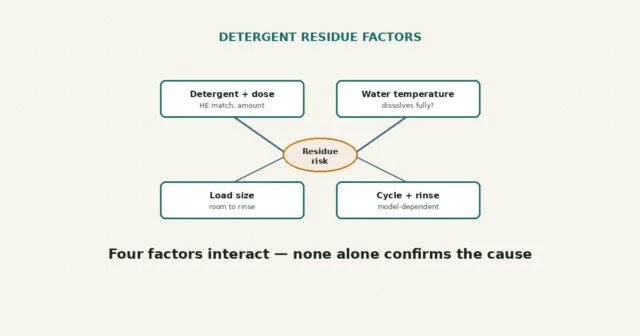
White residue may be undissolved detergent, lint or a soil–detergent interaction. HE compatibility, dose, load, water and cycle choices can…
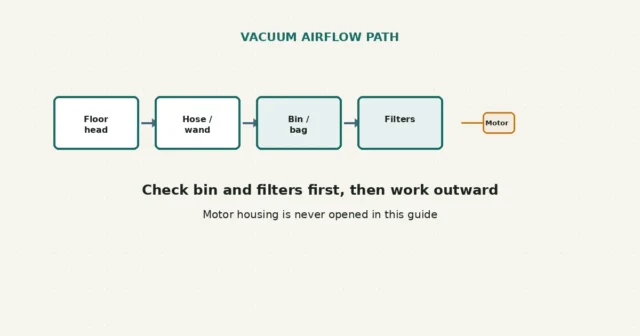
A full bin or bag, dirty filter, blockage or poorly seated part can reduce suction. Follow the model-approved airflow checks…