Freezer Frost on Drawers: Air Leaks, Blocked Vents and Next Steps
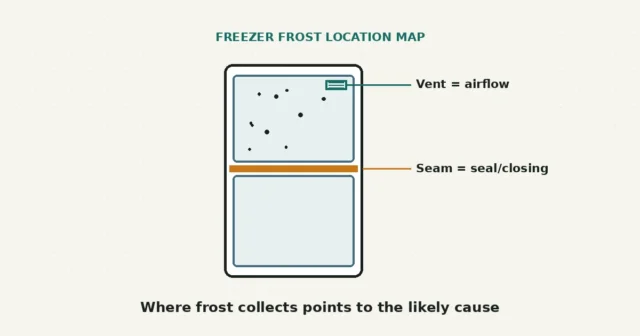
Where frost collects can guide the first inspection, but it does not confirm a cause. Check closure, seals, humidity and…
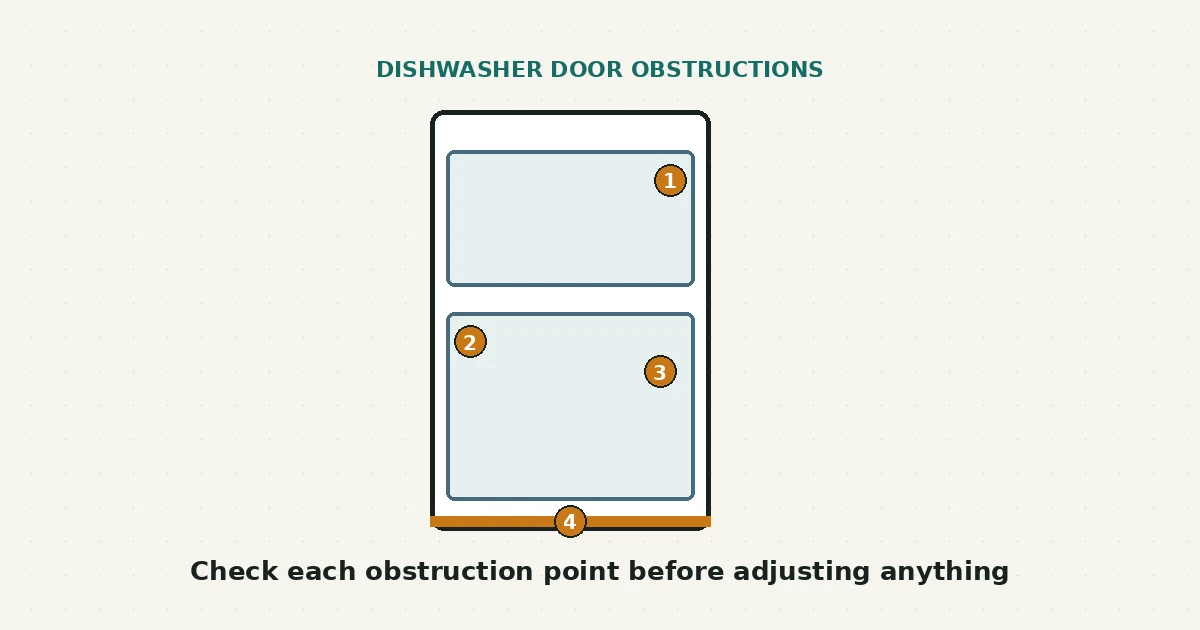
A rack, utensil, debris at the seal or installation alignment can keep a dishwasher door from closing. Inspect the visible door path first and do not force it. If the obstruction checks pass, use the model’s installation and service guidance rather than assuming the latch is broken.
Slide each rack out as the manual permits, check that no item protrudes past its edges, and look along the door seal for debris. Reseat the racks and try the door gently. If it still resists, stop and continue with the alignment checks instead of forcing the latch.
Dishwasher doors close against a gasket seal and latch into a strike mechanism near the top. Either of those can be interrupted by something simple: a tall item leaning past the rack’s edge, a rack rolled out too far and slightly off its track, food particles built up along the seal, or the unit sitting slightly unlevel so the door doesn’t meet the latch squarely. Manufacturer troubleshooting documentation lists exactly these as the first things to check — mechanical latch or hinge failure is real but less common than a simple obstruction.
It helps to think of the door as needing two things to go right at once: a clear physical path to swing all the way up, and precise alignment at the top so the latch hook can catch the strike plate. An obstruction interrupts the first. A slightly unlevel dishwasher, a bent rack rail, or worn hinge hardware can interrupt the second even when nothing is visibly in the way — which is why a door that “looks” clear can still fail to latch, and why working through checks in order rather than jumping straight to a parts replacement saves both time and money.
| What you find | Likely explanation | Reasonable next step |
|---|---|---|
| An item clearly blocking the door path | Simple obstruction | Remove or reposition it, then retest — usually resolves immediately |
| Racks seem fine, door still won’t close | Unit may not be level, or hinge/latch alignment may be off | Check level with a bubble level, front to back and side to side |
| Door closes but doesn’t latch or click | Possible latch or strike misalignment | Compare against your model’s manual before assuming a part has failed |
| Door feels heavy, drops suddenly, or won’t stay open on its own | Door spring or cable wear | Note the behavior for a technician rather than adjusting spring tension yourself |
These are common patterns, not a confirmed diagnosis for your unit — a dishwasher that’s been slightly misaligned for a while can show more than one of these signs at once.
It’s worth noting whether this is happening for the first time or has become a repeated annoyance, since the two point in slightly different directions:
This guide covers obstructions, rack position, seal cleaning, and leveling — checks a user can perform without tools or disassembly. It does not cover replacing a door latch, spring, cable, or hinge assembly, or any internal electrical or control-board diagnosis. If the door mechanism itself appears damaged rather than simply misaligned, that’s a reasonable point to contact a qualified technician.
If your dishwasher is also leaving a chalky or streaky residue on dishes, the hard-water-vs-detergent comparison uses a similar side-by-side approach. For other closure symptoms, the refrigerator paper-test guide and the freezer drawer seal and vent checks follow the same observe-before-you-adjust logic.
First time here? See how to approach any RFSE guide safely, or browse the full Appliance Care hub for more checks like this one.
Do not try to run it until the door closes and latches as the manual describes. Do not hold, tape or force the door shut, and do not bypass any switch or interlock. If it will not latch after the visible checks, stop and arrange model-specific support.
Yes — an overloaded rack is one of the more common causes, since it’s easy for a single tall or oddly shaped item to catch the door without being obvious at a glance.
New installations sometimes have leftover shipping packaging, protective film, or an unlevel base from installation that hasn’t been checked yet — those are worth ruling out before assuming anything is actually broken.
No — forcing it risks bending the door, hinge, or latch, which turns a simple obstruction into a real repair. Stop, remove the racks, and work through the checklist instead.
Yes — irregularly shaped items like large mixing bowls, cutting boards, or oven trays are more likely to sit at an angle that catches the door than uniform loads of plates and glasses, so it’s worth double-checking the load whenever you use one of these.
This guide is based on manufacturer support documentation current as of publication. Latch design and adjustment procedures vary by model — check your dishwasher’s official manual for specifics.
Where frost collects can guide the first inspection, but it does not confirm a cause. Check closure, seals, humidity and…
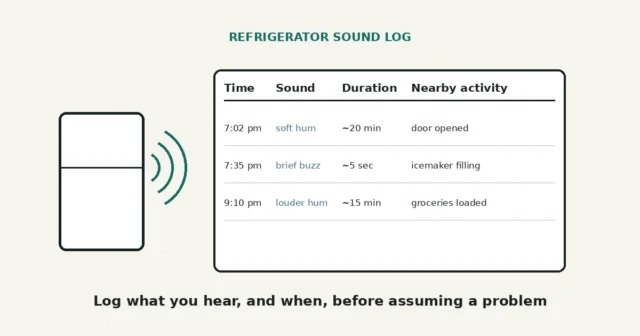
Many refrigerator sounds are part of normal operation. A short timing log helps compare a new hum or buzz with…
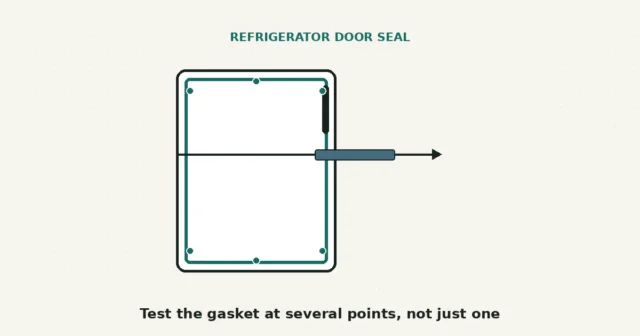
A refrigerator door that won’t seal is usually an obstruction, a dirty or worn gasket, or a leveling issue. Work…