Freezer Frost on Drawers: Air Leaks, Blocked Vents and Next Steps
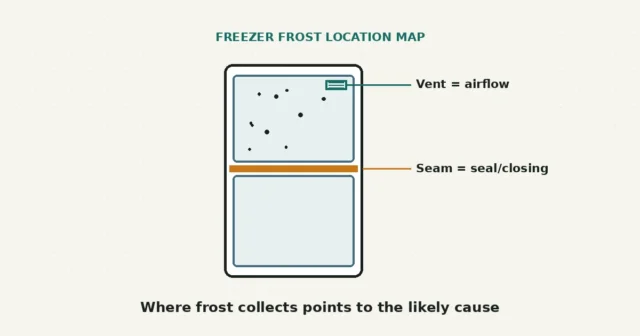
Where frost collects can guide the first inspection, but it does not confirm a cause. Check closure, seals, humidity and…
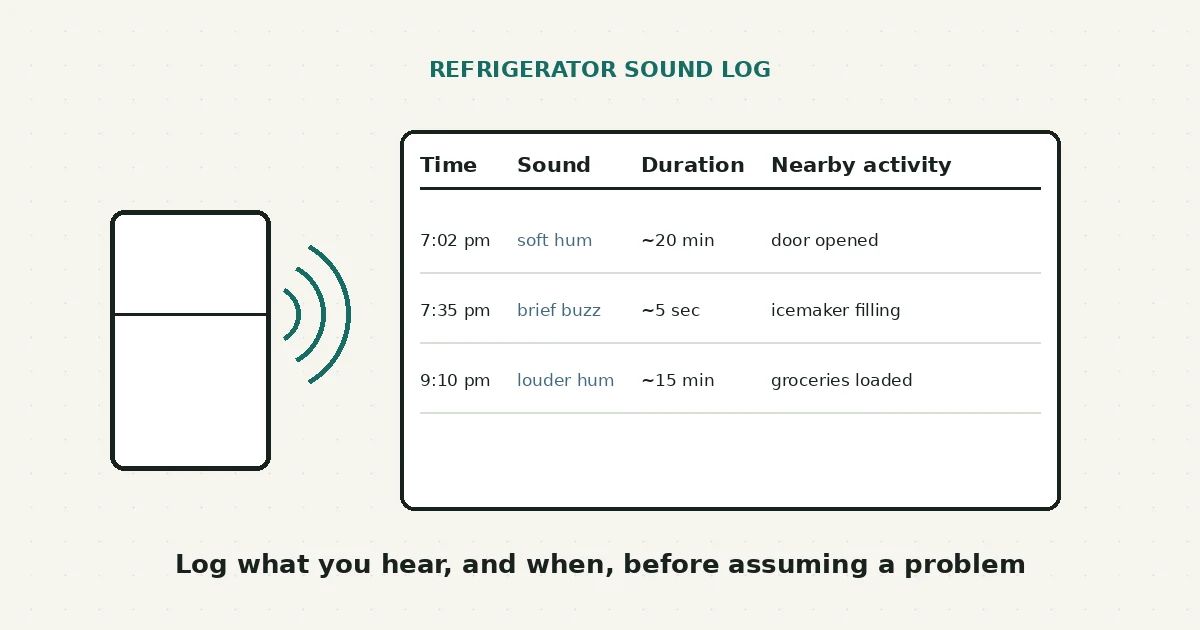
Many refrigerator hums and buzzes are part of normal operation, but the exact pattern depends on the model. Timing, duration, location and recent activity are more useful than volume alone. Log those details, then compare them with the manufacturer’s sound guide.
Record when the sound starts, how long it lasts and whether it follows a door opening, icemaker cycle or water use. If the pattern matches the official guide for your model, it may be routine. A new sound paired with grinding, repeated tripping, heat, smoke or a burning smell needs a different response.
Depending on the model, operating components can include a compressor, one or more fans, an icemaker and water valves. GE’s support material, for example, lists normal clicks, buzzes, water-fill hums and changes in fan speed. The same description does not apply universally, which is why identifying the model and the trigger for the sound matters.
What’s harder to judge from a single moment of listening is whether the volume or pattern has actually changed. That’s where a short observation log helps more than trying to diagnose from memory.
It would be convenient if there were one benchmark hum every refrigerator should match, but there isn’t. Compressor type, insulation, cabinet size, how the unit is loaded, room temperature, and even the floor it sits on all affect what “normal” sounds like for a given appliance. A newer, high-efficiency compressor can run longer per cycle but more quietly than an older one that runs in short, louder bursts — both are working as designed. This is exactly why manufacturer support pages describe sound patterns and likely sources rather than giving a single decibel figure to check against, and why this guide asks you to compare your unit against its own recent history rather than against a fridge you remember from somewhere else.
Rather than guessing whether a sound is “normal,” spend a day or two noting a few details each time you notice it. This turns a vague impression into something you — or a technician, if you end up needing one — can actually work with.
| Pattern in your log | What it may suggest | Note |
|---|---|---|
| Brief buzz repeating roughly every 10–15 minutes on some GE models | Icemaker may be attempting to fill without water | Check the exact manual; turn the icemaker off if no water supply is connected |
| Continuous soft hum, louder right after the door closes or on a hot day | Compressor and fans responding to a temperature change | Normal operating behavior described in manufacturer documentation |
| Hum that’s noticeably louder than your baseline, with no clear trigger | Source cannot be confirmed from sound alone | Check external clearance and compare with the model’s official sound guide |
| Grinding, thumping, or a fan-blade sound that changes pitch | May involve an internal obstruction or fan area | Do not remove panels; contact the manufacturer or a qualified technician |
| Any sound paired with burning smell or sparking | Outside this guide’s scope | Stop and contact a professional |
This table describes patterns, not causes confirmed in your specific unit — the same sound can have more than one explanation, and a log spanning a day or two will tell you far more than a single listen.
This guide covers listening, logging, and the few checks a user can safely perform — clearing obstructions, cleaning accessible coils, confirming a water line is connected. It does not cover compressor repair or replacement, refrigerant handling, sealed-system work, or internal electrical diagnosis. Those require a qualified appliance technician, and no observation log can substitute for a hands-on inspection when a technician is genuinely needed.
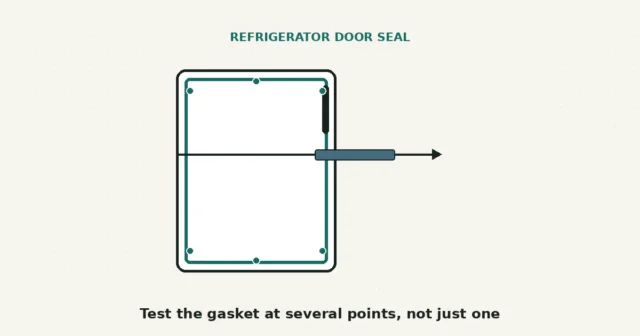
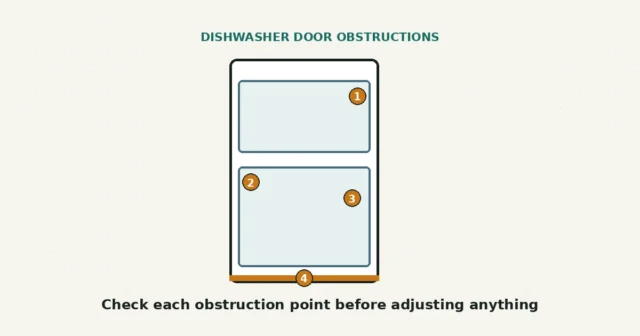
A door that is not sealing can change how often the refrigerator runs, so the paper-test method for checking a door seal is a useful external check. The freezer frost guide applies the same observation-first approach to closure and visible vents. If the vibration actually comes from a nearby dishwasher, use the dishwasher door obstruction checklist instead of assuming the refrigerator is responsible.
New here? Start with RFSE's general approach to any guide, or browse more of the Appliance Care hub.
Quiet periods can be normal when the unit is not actively cooling. The useful comparison is with the normal on-and-off pattern described for your model, not a rule that every refrigerator must always make sound.
Loading room-temperature food can change cooling activity, but there is no universal time or sound level that applies to every model. Record the change and compare it with the manufacturer’s guidance.
Yes, and it’s worth logging separately — clicking is often associated with a component starting or stopping (like a compressor cycling on) rather than continuous operation, so note it as its own entry rather than lumping it in with humming.
Sometimes — sound that’s clearly coming from the back or bottom, near the compressor, versus sound from inside the freezer near the evaporator fan, can point you in a rough direction, but a confident diagnosis usually needs a technician’s tools rather than listening alone.
A day or two usually captures enough variation — a full grocery restock, a hot afternoon, several door openings — to tell a routine pattern from something that’s actually changed. If you’re still unsure after that, a longer log rarely hurts and gives a technician more to work with if you do end up calling one.
This guide is based on manufacturer support documentation current as of publication. Normal sound patterns and their timing vary by model — check your refrigerator’s official manual or manufacturer support page for guidance specific to your unit.
Where frost collects can guide the first inspection, but it does not confirm a cause. Check closure, seals, humidity and…
A refrigerator door that won’t seal is usually an obstruction, a dirty or worn gasket, or a leveling issue. Work…
A rack, utensil, seal obstruction or installation alignment can keep a dishwasher door from closing. Check the visible path before…