Refrigerator Makes a Humming Noise: What Is Normal and What Is Not
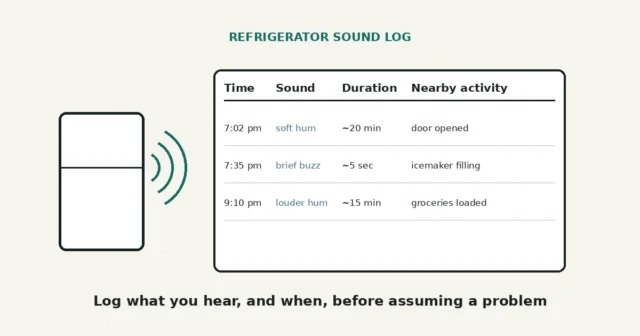
Many refrigerator sounds are part of normal operation. A short timing log helps compare a new hum or buzz with…
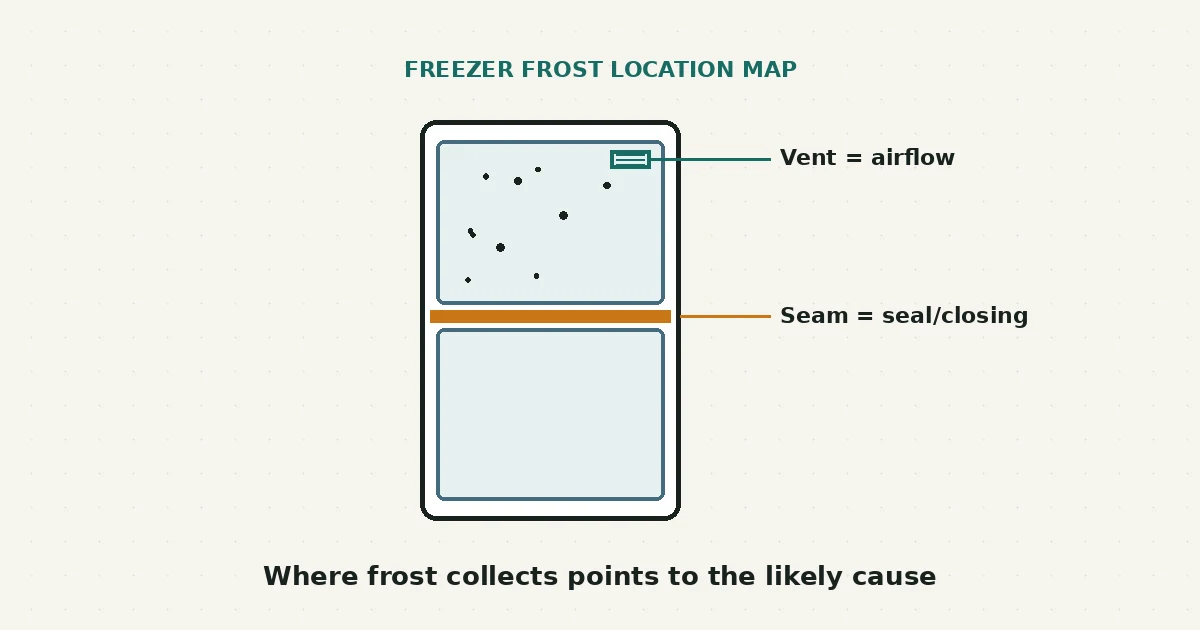
Frost on freezer drawers commonly follows extra humid air entering through frequent openings or an incomplete seal, and blocked vents can contribute to moisture problems. Where frost collects can guide your first inspection, but it cannot confirm the cause by itself.
Look first at the door or drawer path, gasket and the model-specific vent locations shown in your manual. Frost beside a seam makes closure worth checking; frost near a vent makes airflow worth checking. Light frost during humid weather or frequent openings may be normal. The map below sets an inspection order, not a diagnosis.
Every time a freezer door or drawer opens, warm room air carries moisture into the compartment. Manufacturer guidance notes that frequent openings and high humidity can produce some frost, while an obstructed gasket or blocked air vent can make the problem worse. It becomes worth investigating when frost keeps growing, concentrates heavily around a closure point, or interferes with a drawer moving fully.
Defrost behavior varies by model. Some units manage ordinary frost automatically, while manual-defrost models have a different routine. That difference matters: do not infer a failed defrost component from appearance alone or start removing interior panels. First confirm how your exact model is designed to operate, then limit the inspection to closure, gasket condition, loading and visible vent clearance.
| Frost pattern | Possible explanation | Reasonable next step |
|---|---|---|
| Heavy frost right at the drawer’s front seam or gasket line | Drawer not closing fully, gasket dirty or damaged, or something blocking full closure | Check for obstructions, clean the gasket, and confirm the drawer glides and latches fully |
| Frost concentrated around a vent opening (often rear or upper back of the compartment) | Airflow between fridge and freezer sections is restricted | Clear anything resting against or packed tightly around the vent |
| Frost worse after grocery trips or hot, humid days | Extra humid air may have entered during longer or more frequent openings | Close the drawer fully and compare the pattern later using the observation interval in your manual |
| Thick ice that has fused food packages together or jammed the drawer track | Frost has been accumulating for a while without clearing | A manual defrost is likely needed; consult your manual for the recommended process for your model |
These patterns are meant to guide where you look first, not to replace a full inspection — more than one cause can be present at once, particularly if a drawer has been struggling to close for a while.
A single glance can be misleading because recent door openings and room humidity affect what you see. After confirming that the drawer closes and the vents are clear, compare the pattern again at a consistent time using any observation interval or defrost guidance in your manual:
Frost that stops growing after a closure or loading correction supports that explanation, but it still does not prove it. Frost that returns quickly after the manual’s recommended defrost process, with the seal and vents clear, is useful information to give the manufacturer or a qualified technician.
This guide covers airflow, sealing, and drawer-closure causes of frost — the parts a user can reasonably inspect. It does not cover the defrost heater, defrost timer or control board, evaporator fan motor, or refrigerant system. If frost returns quickly after a full defrost and every check above passes, that pattern is worth describing to a qualified technician rather than continuing to troubleshoot components behind the interior panels yourself.
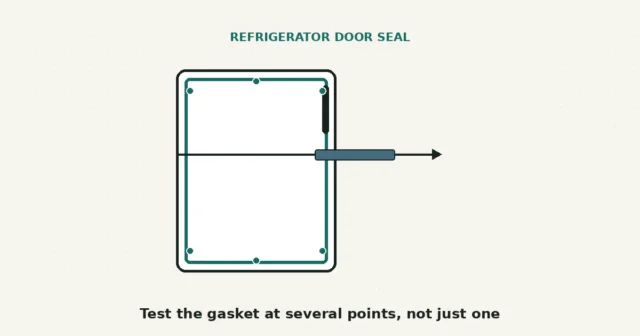
Frost that concentrates along a drawer seam is closely related to a refrigerator door that won't seal — both come down to the same paper-test logic, just applied to a different part of the unit. If your fridge has also started sounding different, a short sound-timing log can help you tell normal operation from something worth watching. And if hard water or film is showing up in the dishwasher too, this comparison of mineral scale vs. detergent residue uses the same observe-before-you-act approach.
If this is your first RFSE guide, see how to work through any guide here safely, or browse the rest of Appliance Care for more.
No — a light, even layer that doesn’t interfere with drawers or storage is common, particularly in humid conditions or with frequent door openings, and isn’t necessarily something to fix.
This depends heavily on the model — many newer units are self-defrosting and rarely need a manual defrost, while older or manual-defrost models may need it periodically. Check your manual for guidance specific to your unit.
Yes, indirectly — an overfull compartment can block the airflow paths the design relies on, which creates the same warm-pocket conditions as a blocked vent even though nothing is technically broken.
Frost appearance alone cannot establish food safety. If a drawer may have stayed open or food has softened, follow official food-safety guidance for time and temperature rather than judging by frost or touch.
Warmer, more humid room air carries more moisture with it every time the door or drawer opens, so the same habits that produce a little frost in winter can produce noticeably more during humid months — this alone doesn’t indicate anything has changed mechanically.
This guide is based on manufacturer support documentation current as of publication. Vent locations, drawer mechanisms, and defrost procedures vary by model — check your freezer’s official manual for specifics.
Many refrigerator sounds are part of normal operation. A short timing log helps compare a new hum or buzz with…
A refrigerator door that won’t seal is usually an obstruction, a dirty or worn gasket, or a leveling issue. Work…
A rack, utensil, seal obstruction or installation alignment can keep a dishwasher door from closing. Check the visible path before…