Freezer Frost on Drawers: Air Leaks, Blocked Vents and Next Steps
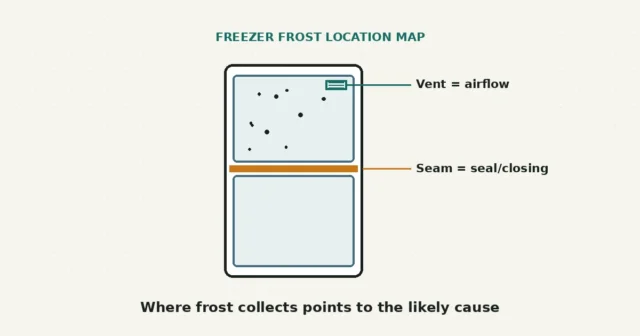
Where frost collects can guide the first inspection, but it does not confirm a cause. Check closure, seals, humidity and…
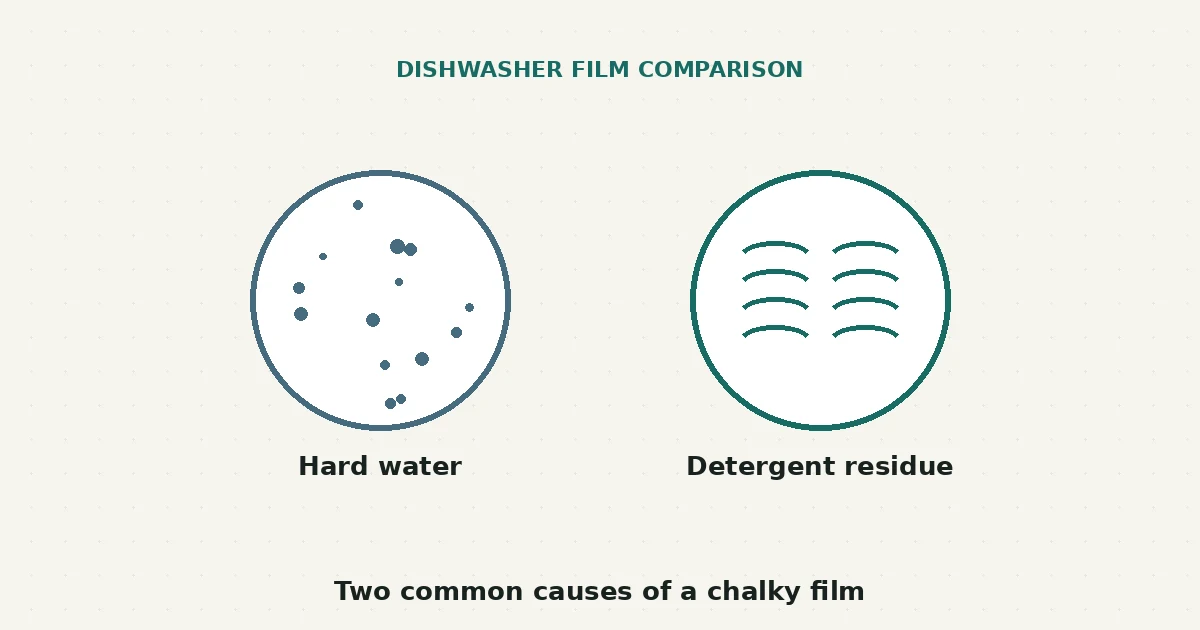
A chalky white film on glasses or inside the tub commonly involves water hardness, detergent, rinse aid or a combination of them. Permanent glass etching can look similar. Compare several clues before changing products or settings, and treat the result as a starting point rather than a diagnosis.
First see whether the haze is a removable deposit or a permanent change in the glass. Gently wipe one item with a soft damp cloth. A removable, chalky deposit is consistent with mineral or wash residue; haze that does not change may be etching or another issue. Use the comparison below only to choose the least invasive next check.
Hard water carries dissolved calcium and magnesium. As water heats and evaporates during the wash and dry cycles, those minerals stay behind as a fine white deposit on glass, on the tub interior, and on the heating element. Detergent residue is a different mechanism: if a cycle runs too cool, if the dispenser is blocked, or if too much detergent is used for your water’s hardness, some of it never fully dissolves or rinses off, leaving a filmy or gritty coating that can look a lot like mineral scale from across the kitchen.
Both are common possibilities, but appearance alone cannot rule out poor rinsing, food soil, a blocked dispenser or another performance problem. Water quality and detergent choice can also interact, so a household may see more than one kind of residue on the same load. That is why the checks below compare patterns over several items and cycles instead of treating one mark as conclusive.
It’s also worth separating film from etching, which can look similar but is a different, usually permanent condition. Etching happens when water is unusually soft or when too much detergent is used relative to the soil load, and it shows up as a cloudy haze that doesn’t wipe off because it has physically altered the glass surface rather than sitting on top of it. If the fixes in this guide don’t change anything after a few cycles, etching — or simply glass that has reached the end of its practical life — is worth considering.
| Sign | Points toward hard water | Points toward detergent residue |
|---|---|---|
| Texture after a gentle wipe | Often looks chalky or powdery when removable | May look streaky, gritty or uneven |
| Where it appears | May affect glassware and the tub across the load | May appear with caked detergent in the dispenser or incomplete rinsing |
| Small vinegar check on compatible glass | A removable mineral deposit may soften or lighten | No change does not prove detergent residue; the haze may have another cause |
| Interior of an unused detergent dispenser cup | Usually clean | May show dried, caked, or undissolved detergent |
| Water-hardness information | A utility report or water test showing hard water supports this possibility | Detergent dose, freshness, cycle and dispenser operation still need separate checks |
These are indicators, not a lab test — a kitchen can have some of both at once, especially if hard water is also preventing detergent from fully dissolving. Treat the table as a starting point for which fix to try first, not a certain diagnosis.
If the fingernail test alone doesn’t make things clear, try this on one filmed glass before you commit to a fix:
If the spot lightens, a removable mineral deposit is one reasonable possibility. If it does not change, do not assume detergent is proven: permanent etching, food soil or a different residue may look similar. Whirlpool describes vinegar as one way to remove white residue but warns that frequent use can damage a dishwasher, so this limited glass-only check is not a recommendation to pour vinegar into the appliance.
This guide covers water-chemistry and detergent-related film only. It doesn’t cover the water inlet valve, internal plumbing, heating element wiring, or control board diagnostics — those are jobs for a qualified technician. If film appears alongside the dishwasher not filling, not draining, or tripping a breaker, treat that as a separate, more involved issue.
A dishwasher that leaves film behind sometimes also struggles to close properly — if that’s happening too, the visual obstruction checklist for a sticking door is a good next stop. For the same low-risk method applied to cold appliances, see the paper-test method for a fridge door seal and the freezer drawer closure and vent checks.
If you’re new to RFSE, start with the general approach behind every guide here, or browse the wider Appliance Care hub for related checks.
Appearance alone cannot confirm that an item is clean or safe to use. If residue remains or you are unsure what it is, rewash the item according to the appliance and dishware instructions; seek manufacturer or local water guidance for a recurring unexplained deposit.
It addresses the hard-water half of the problem for many households, but detergent dose and rinse-aid use still matter — a softener isn’t a universal fix for every cause of filming.
More detergent isn’t automatically better and can itself leave residue if it doesn’t fully rinse away — matching detergent type to your actual water hardness, per the product label, tends to work better than simply adding more.
Position in the rack, spray coverage, and how much the glass was rinsed before loading can all vary the result, which is one reason this is a pattern to observe over several loads rather than judge from one.
This guide is based on manufacturer support documentation current as of publication. Water hardness, detergent compatibility, and cleaning-product guidance vary by model — check your dishwasher’s official manual before using any cleaning product inside it.
Where frost collects can guide the first inspection, but it does not confirm a cause. Check closure, seals, humidity and…
Many refrigerator sounds are part of normal operation. A short timing log helps compare a new hum or buzz with…
A refrigerator door that won’t seal is usually an obstruction, a dirty or worn gasket, or a leveling issue. Work…